The Land and Climate Podcast

We cover a new topic with an expert, every other Friday.

Bertie is joined by Dr Sanam Mahoozi to discuss reporting of Iran’s environmental crises.
Alasdair is joined by Marianna Poberezhskaya to discuss the history of climate crisis narratives in Russia.
Alasdair is joined by returning guest and co-author of “Unfrozen: The Fight for the Future of the Arctic,” Mia Bennett, to discuss the Greenland crisis.
Bertie is joined by Dr. Mark Jacobson, author of "Still No Miracles Needed," where the two discuss how existing technology can solve the climate crisis.
Dr. Dagomar Degroot returns to talk to Alasdair about climate change’s role in societal collapse.
Alasdair speaks to Mia Bennett, author of “Unfrozen: The Fight for The Future of The Arctic”
Bertie speaks to medieval historian Annette Kehnel, author of several books on the history of sustainable theory and practice.
Nuclear expert Matthew Hole tells Bertie that fusion power will eventually revolutionise energy, but could bankrupt investors first.
Alasdair speaks to professor Dagomar Degroot about his new book “Ripples on the Cosmic Ocean”.
Bertie is joined by Gökçe Günel, who breaks down why oil-rich states are investing in sustainability.
Alasdair speaks to Wim Carton about his new book, "The Long Heat: Climate Politics When It's Too Late," co-authored with Andreas Malm.
Alasdair interviews Thea Riofrancos about her new book "Extraction: The Frontiers of New Green Capitalism".
Alasdair speaks to Jessica F. Green about her new book 'Existential Politics: Why Global Climate Institutions Are Failing and How to Fix Them'.
Bertie speaks with Copernicus senior scientist Mark Parrington about 2025’s record-breaking wildfire pollution.
Bertie speaks with Plastics Researcher Punyathorn ‘Arm’ Jeungsmarn about the upcoming UN Global Plastic Treaty negotiations.
Alasdair speaks to Simon Bullock about the International Maritime Organisation's new climate policies.
Bertie speaks to former Presidential Science Advisor John Holdren about the slashing of climate science budgets under President Donald Trump's administration.
Alasdair speaks with third-year doctoral student Guy Edwards about the impact of President Gustavo Petro’s pledge on Colombia’s energy transition.
Alasdair speaks with Felix Schulz about public opinion on climate policy and why support for environmental measures is declining in the global north.
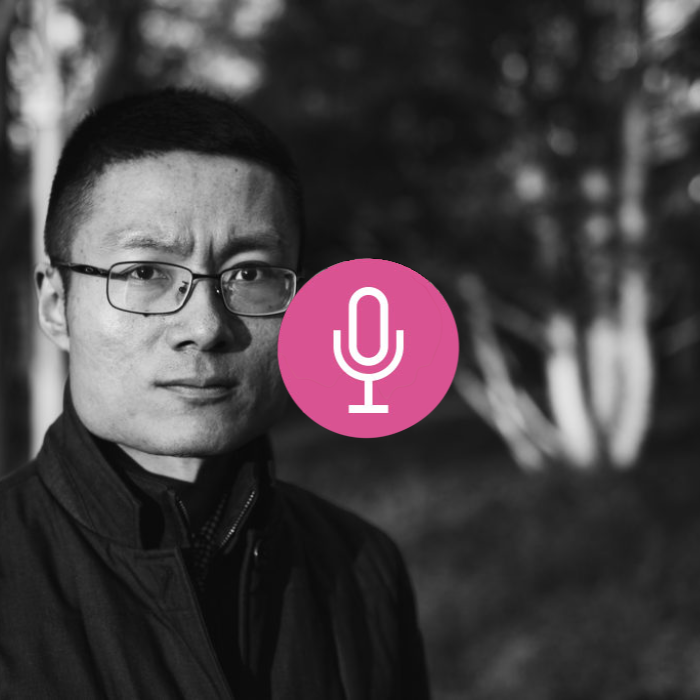
Bertie speaks with Ma Tianjie, author of "In Search of Green China," discussing China’s environmental transformation and how protestors have influenced policymaking.
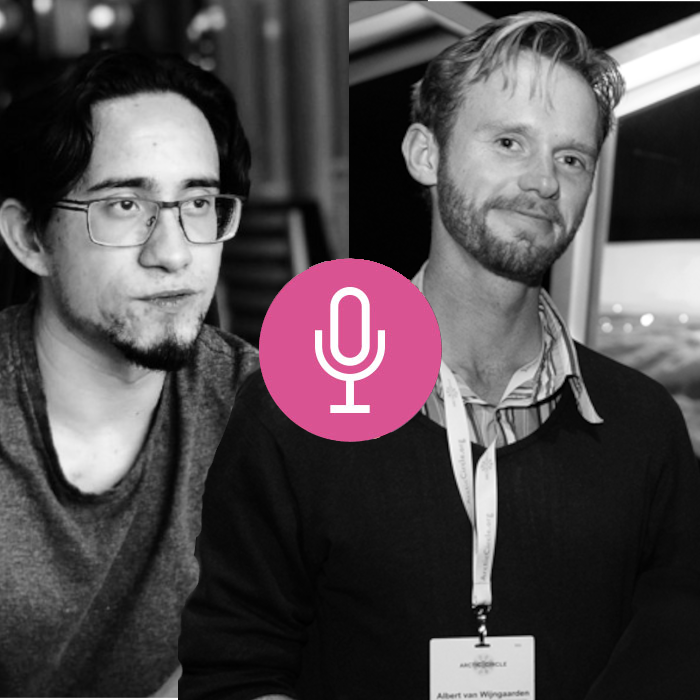
Alasdair speaks with Albert Van Wijngaarden and Adrian Hindes about the risks and governance of geoengineering.
Bertie speaks to Darya Tsymbalyuk about her new book 'Ecocide in Ukraine: The Environmental Cost of Russia's War'.
Bertie talks to Saami activist Tor Tuorda about concerns around plans for new Swedish mining sites.
Alasdair speaks to Jennifer Clapp about her new book “Titans of Industrial Agriculture: How a Few Giant Corporations Came to Dominate the Farm Sector and Why It Matters.”
Alasdair talks to Eunjung Lee about investor-state dispute settlements.
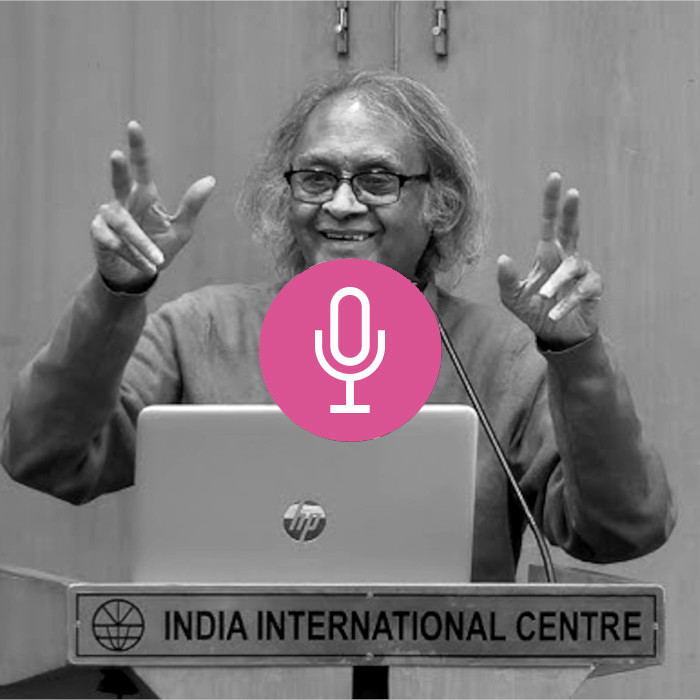
Bertie talks to the Director of the Delhi Science Forum, D. Raghunandan, on whether space exploration is good or bad for the environment.
Alasdair speaks to journalist Margot Gibbs about her investigation into a US government-funded PR firm that profiled pesticide scientists.
Bertie speaks with Professor Maksym Chepeliev about how three years of conflict have affected Ukraine's decarbonisation plans.
Alasdair speaks to Dr. Oscar Berglund about the ways in which climate protest is becoming increasingly criminalised across the world.
Bertie speaks to Ståle Holgersen about his new book 'Against the Crisis: Economy and Ecology in a Burning World' and the relationship between ecological and economic crises.
Alasdair speaks to investigative journalist Margareth Aritonang about President Prabowo Subianto's business interests.
Bertie, Alasdair and Camille discuss Land and Climate Review's investigative reporting of environmental violations by North American wood pellet mills.
Bertie speaks to María Arango about alleged greenwashing and human rights issues in the local area around COP16.
Alasdair speaks to Timer Manurung, from NGO Auriga Nusantara, about the sudden growth of the biomass industry in Indonesia.
Bertie talks to Sherri Goodman about her new book 'Threat Multiplier: Climate, Military Leadership, and the Fight for Global Security'.
Bertie speaks to Sam Quashie-Idun about Greenpeace Africa’s new report “Fast Fashion, Slow Poison: The Toxic Textile Crisis in Ghana”.
Alasdair speaks to Andreas Malm and Wim Carton about their new book 'Overshoot: How the World Surrendered to Climate Breakdown'.
Bertie talks to Lindsey Cottrell from the Conflict and Environment Observatory about the scale of the military emissions gap and what it means for global decarbonisation.
Alasdair talks to Lund University's Jonas Algers about steel decarbonisation.
Bertie speaks to Alden Wicker about her book 'To Dye For: How Toxic Fashion Is Making Us Sick - and How We Can Fight Back'.
Alasdair speaks to former politician and French magistrate Eva Joly about corporate corruption, tax evasion, and the climate crisis.
Ed speaks to Brett Christophers about electricty markets and the role of the private sector in renewable energy projects.
Bertie spoke to Dr Sonam Tashi about Bhutan's ambition to phase out agrochemicals by 2035.
Alasdair speaks to Peter Wohlleben about the issues with modern forest management.
Alasdair speaks to Faustine Bas-Defossez from European Environmental Bureau about developments in European farming policy.
Alasdair speaks to Earthjustice attorney Peter Lehner about the US farm bill and agricultural emissions.
Bertie speaks to Dr. Vincent Ialenti about his book, 'Deep Time Reckoning: How Future Thinking Can Help Earth Now'.
Bertie speaks to Austin Frerick about his new book 'Barons: Money, Power, and the Corruption of America's Food Industry'.
Agathe Bounfour returns to the Land and Climate Podcast to tell Alasdair about a new investigation by Transport and Environment.
Bertie speaks to Stand.Earth's Richard Robertson about Canada's forestry sector.
Bertie speaks to Steve Trent, CEO of the Environmental Justice Foundation, about international fishing regulation.
Bertie speaks to IEEFA's Grant Hauber about his research into CCS in Norway.
Alasdair speaks to Dr Daniel Quiggin, senior research fellow at the Chatham House Environment and Society Centre, about aviation.
Bertie talks to Transport & Environment's Agathe Bounfour about an investigation into oil-funded research groups and EU policymaking.
Alasdair talks to Rachel Rose Jackson about Corporate Accountability's new research that found considerable flaws in the 50 most used offset projects.
Alasdair talks to Dr Martin Dermine, Executive Director of Pesticide Action Network Europe, about why EU regulation of agrochemicals is moving so slowly.
Alasdair talks to Sir Dieter Helm, Professor of Economic Policy at The University of Oxford, about his new book 'Legacy: How to Build the Sustainable Economy'.
Bertie speaks to environmental journalist Stephen Robert Miller about his new book, 'Over the Seawall: Tsunamis, Cyclones, Drought, and the Delusion of Controlling Nature'.
Bertie talks to nuclear policy expert Dr. Paul Dorfman about whether nuclear power has a part to play in decarbonisation.
Alasdair talks to John Vaillant, author of the Baillie Gifford shortlisted book 'Fire Weather: A True Story From A Hotter World'.
Alasdair talks to Professor Jonas Fossli Gjersø about the history of Equinor - previously Statoil - and the way it has shaped Norway's economy, history, and environmental policy.
Alasdair talks to Professor Bart Elmore, author of 'Seed Money', about the history of American company Monsanto and its impact on people, plants and animals.
Bertie talks to Omar Elmawi about the controversy surrounding McKinsey and other organisations involved with the inaugural Africa Climate Summit.
Bertie speaks to investigative journalists Eli Moskowitz and Mira Sys about biofuel fraud in the EU.
Alasdair speaks to Professor Mats Ingulstad about deep sea mining, and the history of extraction in Norway.
Bertie speaks to Lighthouse Reports' Lead Food Systems journalist Thin Lei Win about their new investigation into Copa-Cogeca, Europe's largest agricultural lobby group.
Alasdair speaks to Professor Ángela Vergara about the history, economics, and environmental impact of mining in Chile.
Edward speaks to Dr Joëlle Gergis about her experience as the lead author of Working Group 1 of the IPCC's latest assessment report (AR.6).
Bertie asks Professor Diana Ojeda why many scholars and activists are wary of populationist narratives in climate planning.
Alasdair speaks to Thomas Pellerin Carlin, Director of the EU Programme at the Institute for Climate Economics, about the French politics of nuclear energy and sufficiency.
Bertie speaks to Professor Laura Murphy about international supply chains and forced labour in China's Xinjiang Autonomous Region.
Alasdair speaks to Dr. Doug Parr about the UK's place on the global stage and how it is taking dangerous risks with nuclear power and aviation.
Bertie speaks to Wijnand Stoefs, Carbon Market Watch's policy lead on Carbon Removal, about how EU policy is developing around greenhouse gas removals.
Professor Paul Stevens, of University of Dundee and Chatham House, discusses the history of energy transitions and the fallacy of ‘peak oil’.
Bertie speaks to fashion journalist and sustainability consultant Lucianne Tonti about her new book Sundressed: Natural Fabrics and the Future of Clothing.
Alasdair speaks to Professor Mike Norton about new research on neonicotinoids.
Lauren talks Professor Thane Gustafson about how Russian leaders' commitment to climate change is affected by factors both at home and overseas.
Alasdair talks to Roger Smith, Japan Director for Mighty Earth, about Japanese biomass imports and the risks of the country's coal power stations switching to wood-burning.
Dhanasree Jayaram tells Bertie about risks that could threaten Antarctica, including illegal fishing, militarisation, bioprospecting, tourism, and resource extraction.
Bertie spoke to Professor Andrea Baronchelli and Dr. Max Falkenberg from The IRIS Academic Research Group about rising climate scepticism and denial online.
Alasdair speaks to Kelly Stone, Senior Policy Analyst at ActionAid, about her time at COP27 and where international diplomacy is taking offset markets and their governance.
Harvard scholar Rosetta Elkin explains how large-scale tree planting in otherwise treeless environments rarely makes ecological sense.
Lauren talks to Thane Gustafson about the future of Russian Oil through the Climate Crisis and the context of the ongoing war in Ukraine.
Alasdair spoke to Dr. Kate Dooley, an author of the Land Gap Report which found that national policies for carbon removals "could push ecosystems, land rights and food security to the brink."
Bertie speaks to Dr. Karim Ahmed about his recent white policy paper on loss and damage, which is being presented at COP27.
Alasdair asks Professor John DeCicco about the alarming findings of his research: liquid biofuels could be worse for the climate than fossil fuels.
Bertie talks to science journalist Matt Simon about his upcoming book; A Poison Like No Other: How Microplastics Corrupted Our Planet and Our Bodies.
Alasdair spoke Finlay Asher, founder of Safe Landing, about the reasons technological and market-based solutions to aviation emissions are not going to get us to net-zero, and what the sector should be doing instead.
Alasdair talks to Dr. Marija Taflaga about shifting climate politics in Australia.
Lauren talks to Tania Li, Professor of Anthropology at the University of Toronto, about the sustainability of the oil that's in 50% of supermarket food products - and the issues with labour and land rights in Indonesia's palm oil industry.
Bertie speaks to Melani Gunathilaka, a Sri Lankan climate activist who has become a leading voice in the Gotagogama protests.
Bertie talks to Drew Pendergrass, coauthor of Half Earth Socialism, recently published by Verso books.
Lauren talks to Assaad Razzouk about the recent elections in Lebanon and systemic problems with climate finance.
Daniel Klier is CEO of ESG Book, and was previously HSBC's first Head of Sustainability, and Chair of the Bank of England Climate Risk Working Group.
Bertie talked to the Executive Director of Greenpeace Southeast Asia, Yeb Saño, about the conclusion of a 7 year inquiry into human rights and climate change in the Philippines.
Award winning author and journalist Sonia Shah talks to Alasdair about her book, The Next Great Migration: The Beauty and Terror of Life on the Move.
Our guests Anatoli Smirnov and Sabina Assan are researchers at Ember, international data analysts for clean energy solutions in the power sector.
Bertie talks to Dame Meg Taylor DBE about plastic pollution, nuclear waste, illegal and unsustainable fishing, and loss and damage.
Bertie talks about the issues and benefits of different CCS technologies with Dr. Howard Herzog, a world expert on carbon capture, having studied it at MIT's Energy Initiative for over 30 years.
Bertie talked to peat expert Professor Roxane Andersen about the Flow Country in Scotland, and her research on peatland restoration, monitoring, and fires.
Alasdair MacEwen talks to Associate Professor Wim Carton of Lund University Centre for Sustainability Studies about offset markets, carbon removal technologies, and IPCC modelling.
Bertie talks to Sam Lawson from Earthsight about a public letter from 120 NGOs calling for a boycott on Russian and Belarusian wood.
Alasdair talks to Sami Yassa, senior scientist at the Natural Resources Defense Council about Bioenergy with Carbon Capture and Storage.
Professor Liz Carlisle talks to Bertie about her new book, 'Healing Grounds - Climate, Justice, and the Deep Roots of Regenerative Farming'.
Alasdair talks to Professor John Sterman about his seminal research that proved burning wood for energy will "increase atmospheric CO2 for at least a century".
Louisa Casson from Greenpeace explains her work looking into carbon offsets and how they have developed since COP26. She also gives her view on the development of voluntary carbon markets.
Romain Ioulalalen from NGO Oil Change International tells Alasdair about the challenges with a global phase out of fossil fuels, and what political changes to expect in the next few years.
Bertie talks to Professor Holly Jean Buck about whether 'net zero' is an effective framework for climate policy.
Lauren asks Mark Bould about his new book 'The Anthropocene Unconscious'. They discuss whether fiction goes far enough in representing narratives of climate crisis, ranging from Jane Austen’s ‘Mansfield Park’ to the 'Fast & Furious' franchise.
Ed speaks to Duncan Brack, Associate Fellow at Chatham House and author of numerous reports into industrial-scale biomass and forestry policy.
Bertie talks with veteran climate journalist Edward Struzik about his new book, Swamplands: tundra beavers, quaking bogs, and the improbable world of peat.
Alasdair talks to Phil MacDonald, Chief Operating Officer of think-tank Ember.
In this episode Alasdair MacEwen talks to Lina Burnelius of Protect the Forest Sweden about the Swedish forestry model and the threat that industry poses to biodiversity and the survival of ancient Forests.
Alasdair speaks to Dr Dan Quiggin, Senior Research Fellow at Chatham House, about the implications of using bioenergy with carbon capture and storage.
Gareth Redmond-King talks about the preparations for the next climate talks. He explains the UK's role as a climate leader, recent odd missteps leading to the talks and his take on existing progress.
Chief Operating Officer of energy think tank Ember, Phil MacDonald, talks to Alasdair about the new challenges of decarbonising the global energy sector and what has been achieved so far in Europe in the UK.
Edward and Alasdair speak to Sasha Stashwick, climate expert at the Natural Resources Defense Council.
Prof Michael Norton speaks about the gap between science and policy on environmental boundaries and why the concept of GDP is flawed.
Alasdair speaks to Doug Parr about carbon removals and the increasing risk of 'institutional greenwash' in policy and business.

We believe in sharing information - but not yours.

Our funding comes from nonprofit foundations, not from selling your browsing data to companies. So we don't have a huge list of third parties for you to reject cookies from!

We only use necessary cookies for our website to function, and record aggregate data to keep track of our readership figures. We don’t store or share IP addresses visiting the front-end of our site.


If you sign up to our newsletter, we’ll safely store your contact details to use for that purpose, but otherwise, we only use necessary cookies for our website to function, and record aggregate data to keep track of our readership figures. We don’t store or share IP addresses visiting the front-end of our site.