Click here to read the exclusive in The Guardian.
“It was scary. I was literally gasping for air.”
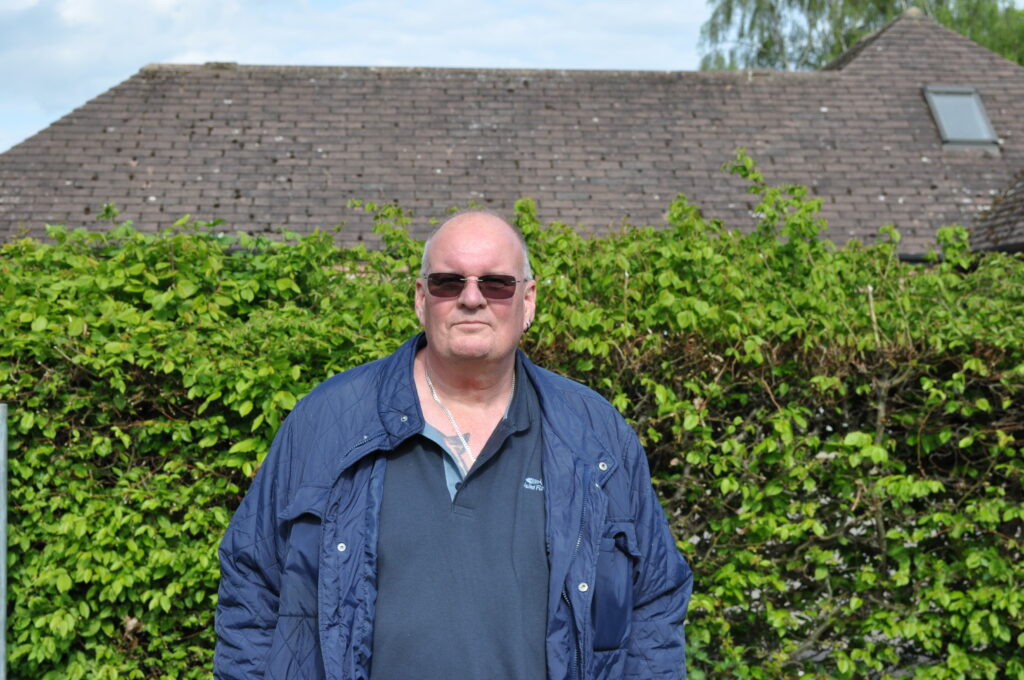
For the first 21 years that Martyn worked at Drax Power Station as a contractor, he never worried about his health. When doctors later asked him about a history of respiratory illness, he says he could only remember catching bronchitis once, when he was five years old.
When the UK’s largest power plant first trialled biomass in 2004, “we weren’t told anything about what was going on,” Martyn said. “All we knew was that we kept seeing yellow specks of stuff mixed in with the coal.”
Martyn was hired full time by Drax in 2005, working in the mills that grind up fuel before it is burned. He was unaware that sustained exposure to wood dust can cause serious health problems, including asthma, dermatitis, and nasal cancer.
Five years later, Martyn was having regular colds, flu, and chest infections. His occupational health checks became increasingly concerning.
“They gave you a printout that said your ‘lung age’. I was in my 40s, but my lung age was 60, then 65, then 68.”
When a specialist diagnosed him with industrial asthma linked to biomass in 2015, he said “it all dropped into place.”
“I took the letter to my supervisor. He said ‘this is going to really hit the fan.’”
Drax moved Martyn around different parts of the site, but his problems continued. He was eventually hospitalised twice, including a three-day stay for double pneumonia.
In 2018, Martyn was suspended with sick pay. His health improved at home, but worsened when he returned. On several occasions he had an asthma attack as soon as he arrived on site – despite not having had any at home.
Martyn says Drax’s Head of Safety and Environment asked him “where do you think you’ve been exposed to biomass?”
“Everywhere,” he replied.
Drax's asthma crisis
Martyn was the first of 10 to sue Drax over health problems diagnostically linked to biomass. Six have settled out of court without admission of liability, and four have trial dates in 2026. All but one have retired early due to ill-health – the other now works remotely.
Over the past year, Land and Climate Review has spoken to claimants or their solicitors for each of the 10 cases. Their stories are all similar to Martyn’s: they say wood dust was prevalent across the Yorkshire site, and that after their diagnoses, Drax’s attempts to limit their exposure failed to relieve their symptoms.
Neil Lindridge, a former mechanical fitter, had surgery to remove nasal polyps. Another claimant remains housebound with disabling conditions, but signed an non-disclosure agreement, according to friends and lawyers.
In 2015, the UK’s Health and Safety Executive (HSE) received four formal reports of occupational asthma diagnoses at Drax. Regulatory follow-up investigations in 2016 “identified significant contraventions of health and safety law” and Drax was served with three improvement notices.
Over the following seven years, HSE developed a criminal prosecution case against Drax. The company pleaded not guilty in 2022, but then in 2023, shortly before the trial date, the case was dropped.
A HSE spokesperson told Land and Climate Review that the regulator “undertook a lengthy and thorough investigation,” but “new information emerged in late 2022” that meant “there was no longer a reasonable prospect of securing a conviction for the most serious failings alleged.”
Five claimants have since filed new lawsuits, one of which settled privately this year. Their roles at Drax were varied, including managers who spent time in offices as well as on the site floor.
Unions are concerned that the full scale of health problems amongst UK power plant staff may be going unnoticed, as fear of losing work discourages workers from speaking out.
When union managers, reps and claimants named and connected us with other workers they said had breathing problems, none were willing to speak on the record.
Richard Foster, a regional manager at Unite the Union until 2024, said workers “know that once they put their head above the parapet, their head gets blown off and they’re blacklisted.
“Young lads with families and massive mortgages will do as many hours as they can.”
Thompsons Solicitors’ industrial disease expert Mark Allen has settled a number of claims against Drax on behalf of Prospect and Unite members. He said “there can be long delays before symptoms develop, and we may not yet know the full extent of those affected by past exposure to harmful, biofuel-linked substances such as wood dust.”
Given this long latency period, and concerns about worker reporting, Unite the Union and GMB anticipate additional lawsuits in the future. The unions are now keeping a register of workers on the Drax site, in the hope that this will assist with further legal action if others develop symptoms.
A contractor called James who is currently working at Drax said unions were conscious of past health crises, such as with asbestos:
“When asbestos was in factories, nobody knew it could kill. We do know that biomass is dangerous. But it takes time before people realise something is not right with their body. The register is for people who have symptoms in the future, to prove this happened.”
GMB’s representative for permanent Drax employees Shaune Clarkson was surprised to learn in our interview that sustained exposure to biomass dust creates a cancer risk.
“I don’t believe that most workers would be aware of these impacts. I am shocked. The employer has a duty of care towards their employees. They’re responsible for that.
“It’s a mucky, dangerous job, and they’re exposing us to carcinogens and not protecting us.”
Drax’s use of biomass has also previously attracted controversy for accusations of greenwashing. The company has received billions of pounds from UK bill-payers in green energy subsidies, despite scientists warning that Drax’s greenhouse gas emissions are now higher than when it burned coal.
The current Labour government has said it is “conscious of concerns about sustainability” with biomass and that the fuel “is not a long-term solution”. Despite this, Parliament voted in June to renew Drax’s subsidy contract until 2031.

Land and Climate Review’s past reporting has highlighted respiratory health issues amongst US residents who live near the facilities that produce Drax’s wood pellets in Gloster, Mississippi. This month, residents of this also filed a lawsuit against Drax over health concerns.
The cost of business
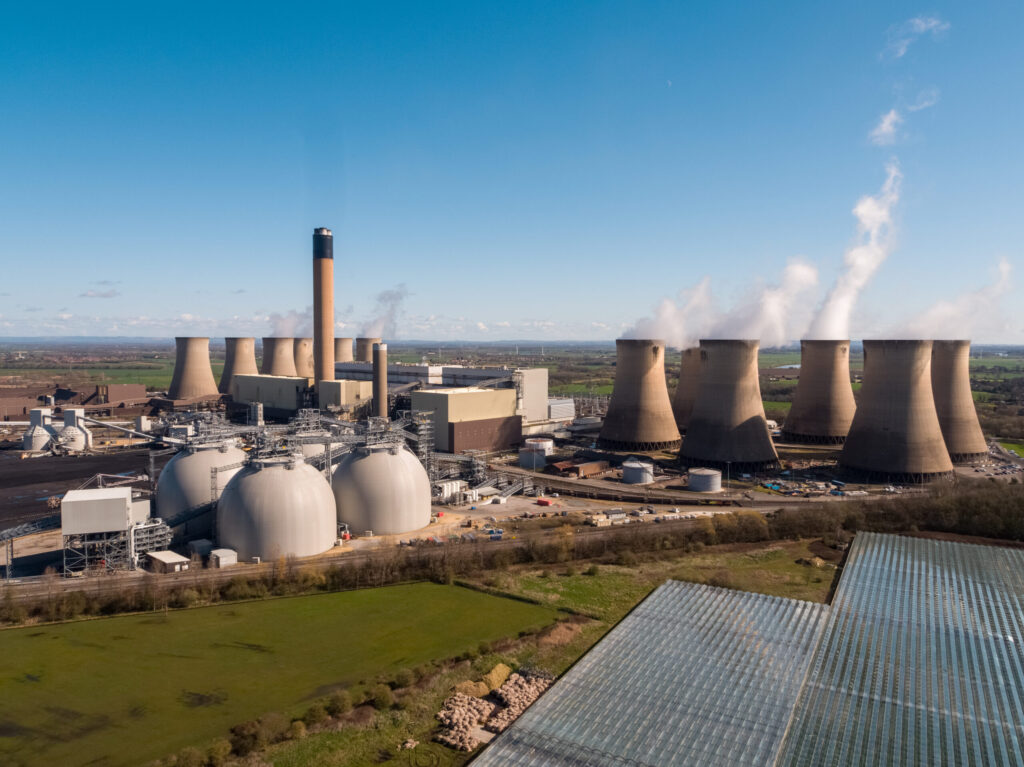
When the first five claimants started working at the power station in the 1980s, Drax was a point of pride. Brand new and publicly owned, it was expanding British coal power even as Thatcher waged war with nearby mining communities. After electricity markets were privatised in 1990, Drax went through a turbulent period, repeatedly changing ownership and accruing over a billion pounds in debt.
By 2005 when Drax Group was formed, the company had a new business plan based around green subsidy schemes which paid electricity generators to burn wood or plants, and paid farmers to grow ‘energy crops’. Drax completed its first on-site trial using locally-grown short-rotation willow as fuel that year.
Converting Drax’s boilers and turbines was a five-year, £100 million project. By 2012 when this work was complete, the UK government was losing faith in domestic energy crops. A 2011 review commissioned by the Department of Energy and Climate Change found that “the potential for scale up is currently restricted by our planting and harvesting capacity, grower acceptance, economics and technology compatibility,” as well as “social resistance”.
The subsidies for generators were still available, however, and Drax was too invested to change course. The company now needed to import fuel from abroad, and sourced suppliers in North America, which involved more significant shipping costs.
Drax Executives have internally acknowledged that European facilities fuelled by locally sourced wood chips have fewer challenges with dust control, but that Drax’s pellets are lighter to ship across the Atlantic Ocean.
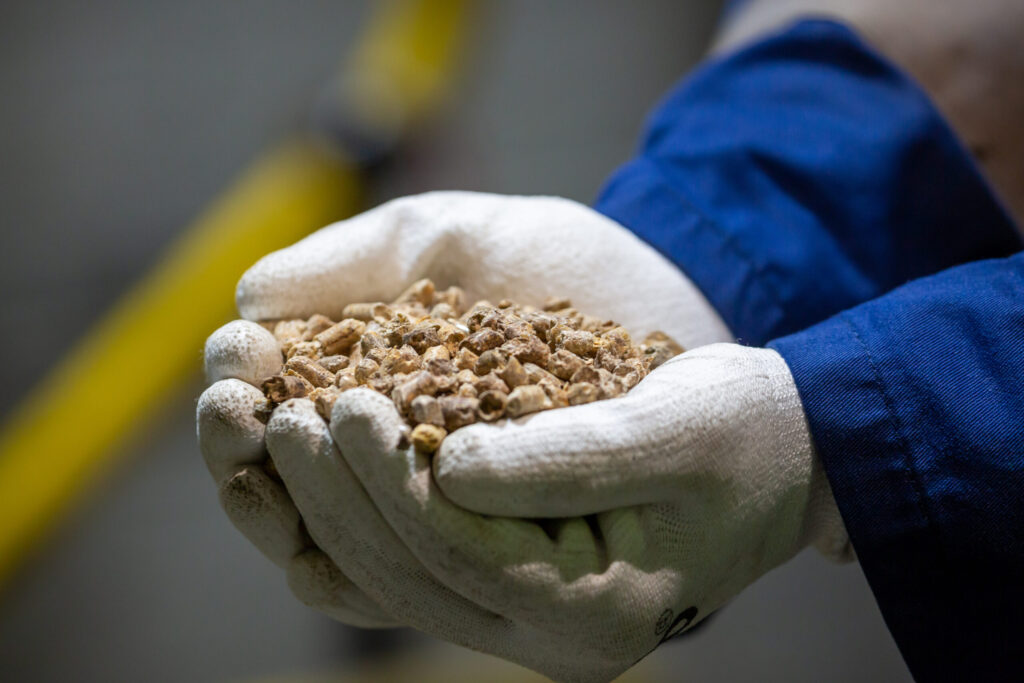
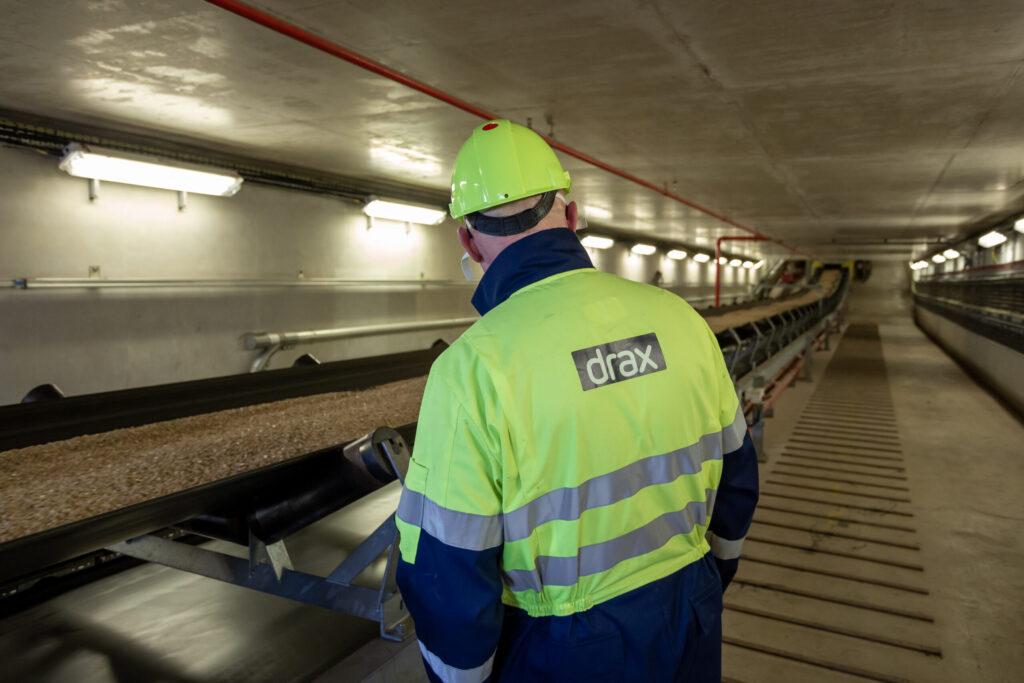
Wood pellets are formed by densely compressing very fine wood dust under high pressures. After shipping them across the Atlantic, Drax uses mills at the power plant to turn the pellets back into dust before burning them. Neil Lindridge describes the dust as “so fine that you can only see it in sunlight”.
Homegrown problems
According to a former worker now diagnosed with occupational asthma, who spoke under condition of anonymity, “the early years were absolutely appalling…There was a lot of exposure without the right information and the right training.”
In 2016, regulatory health inspections “identified significant contraventions of health and safety law.” After visiting the Drax site on four occasions between April and August, HSE issued the company with three improvement notices.
In a formal letter to Drax, Specialist Inspector Heather Cunnington stated that the company had previously told the regulator “that the biomass was received, transferred and milled in a fully enclosed system”. However, Cunnington says that on inspection, “dust was evident indicating the material was not being retained.”
The letter lists various areas of the Drax site with excessive dust build-up, where “only partial cleaning had taken place” at the time of inspection. She says Drax told her problems were “being addressed”, but she “did not observe any clean up” on later visits.
She concluded that “the arrangements in place do not comply with your own Drax Management Instruction [on] Respiratory Health Surveillance” and that “the management system lacks consistency” on health and safety protocols.”
The company subsequently changed their occupational health team. At this time, no compensation claims had been filed – but multiple workers had started to develop health issues.
Internal company documents seen by Land and Climate Review show that Drax had long been aware of the health risks from wood dust. In a 2011 email, a Drax employee informed 15 others of the outcomes of a meeting about “the dangers and control of working with wood dust.”
He stated they found “concerning” information on “the HSE website,” linking to a page called ‘Wood dust: What you need to know’, which described risks of cancer and lung damage.
A 2013 document notes that dust exposure risks causing “allergic reactions, asthma and even cancer” – but says staff “can be confident that the controls established by Drax Power Limited will be effective in preventing health problems.”
An internal health and safety presentation from 2019 states “Biomass pellets are not harmful to health.” By that time, medical specialists had diagnosed five Drax workers with industrial asthma linked to biomass exposure.
The next slide is titled “A frequently asked question? Is Biomass the new Asbestos?”
The Leper Colony
Martyn told Land and Climate Review that Drax did not inform him of the potential risks of biomass until 2013. By that time, the first five workers who would go on to file claims were already developing symptoms.
By 2014, Neil was suffering from rhinitis, a severe allergic reaction in the nose. The only way he could sleep was upright in a chair in his living room. A year later, he underwent a nasal polypectomy.
In 2016, Neil and two others followed Martyn in receiving occupational asthma diagnoses. The three men were then confined to separate workspaces in isolated rooms for over 18 months.
“We would just sit around reading books and magazines…the workshop became known as the leper colony.”
During this period, Neil said he “never got to use” the most safe kind of mask – FFP3 – despite some workers receiving them years earlier. “I was face-fitted for it but was never provided with the correct one.”
“Dust was present on everything. The walkways were a metal grating style so dust from the upper levels would easily fall down between levels onto anyone working below.”
Some said they never received training on proper mask use. “For 20 years, I was using the mask wrong,” said James, who still works on site. “I was never properly face-fitted for it.”
He says that more people now wear FFP3 masks, which is an example of the changes made since HSE’s intervention, but this is “not enough”.
“Everyone [on site] comes into contact with biomass…it’s on the scaffolds, on the bins, everywhere. You might not always be able to see it, but it is definitely in the air.”
Former staff describe particularly high exposure risk during outages or when accidents occur, such as a fire in a 100-metre-tall cooling tower leading to hundreds of tonnes of biomass being dumped on the road in the open air.
Another former Drax contractor who spoke under condition of anonymity said that during temporary shutdowns for maintenance and repair, “the rules are out the window. The lads will take it because they want to make more money.”
Unfinished business
The five workers who had been diagnosed before 2017 remained employed by Drax for years after they had stopped being able to work in the roles they were hired for.
Martyn was advised by his lawyers not to quit until Drax made a decision about his employment. By 2019, he said he had “used up my full sickness pay…my mortgage had been suspended, I was in arrears.
“I said to my union rep, ‘when are Drax going to call me in? Because I’ve heard nothing from them for months.’”
In August 2019, Neil co-wrote a letter to his managers with Shaun Crimmins, a mechanical craftsman who had also been confined to the “leper colony”. After months of stress, they protested the company’s preference for repeated sick leave rather than admitting liability or granting ill-health retirement.
Neil wrote that he had developed “rash symptoms” as well as his breathing and nasal problems, and both described the financial impact of this period and the way it had affected their wives and families.
“You cannot comprehend how much stress this has caused us! How many times does a person have to be ill before a company does what is fundamentally right?”
“We have felt humiliated, ignored and manipulated by our managers. We have had our reputation and integrity questioned…we both feel that the HR department have been threatening…”
Martyn left the company that year, and four others reached settlements by 2021.
Four years after leaving Drax, these claimants said their symptoms had improved considerably, but they all remain on medications for ongoing health conditions.
“I still suffer from shortness of breath. I am on inhalers and more susceptible to colds, which turn into chest infections,” said Shaun.
Neil and Shaun stated their settlements did not cover the loss in pension funds from forced, early retirement.
After the criminal case was dropped, the five men demanded a meeting with HSE, which took place in Leeds in 2023. “To say we were livid is an understatement,” said Shaun. “So we insisted we have a meeting with them face to face.”
“They assured us categorically at the meeting in Leeds that if there were any further cases, they would reinvestigate,” Shaun said. Several other workers who attended agree with this recollection.
Five additional lawsuits have since been filed against Drax. Shaun says this will test whether HSE was “genuine in what they were saying to us.” If so, “they should be revisiting it,” he said.
An HSE spokesperson said it is “unlikely that the word ‘reinvestigate’ would ever have been used,” and told Land and Climate Review that the regulator had only ever received five formal reports of occupational asthma cases at Drax, not 10.
“We are not aware of any new evidence about the continuing risk of harm from exposure to wood dust at the Drax Power Station,” the HSE spokesperson said.
Labour MPs expressed concern at the findings, and support for union efforts. Jon Trickett, MP for Normanton and Hemsworth, said “Our labour movement has long proclaimed that an injury to one is an injury to all. I congratulate trade unions for raising this very important matter.
“The Labour Government must keep all relevant legislation under review to protect workers and, where necessary, punish irresponsible bosses.”
Polly Billington said “It is of great concern if workers’ health is at risk and if the owners and management of Drax have failed to act to protect them.” The MP for East Thanet, who chairs the Renewable and Sustainable Energy APPG and sits on the parliamentary Energy Security and Net Zero Committee, said “workers’ rights are an important part of the transition to clean energy and it is vital that clean energy generation is clean and safe.
“Drax clearly have questions to answer.”
Andy McDonald, MP for Middlesbrough and Thornaby East, said that if measures were not “taken appropriately to protect staff, and they have suffered as a result, then the full legal consequences must flow from that both in civil and criminal terms.”
Barry Gardiner, MP for Brent West, said “I am shocked by the experiences of workers at the Drax Power Station which have been uncovered in this investigation. The fact that ambulances have been called to the power station on numerous occasions is alarming, as are the reports of a so-called ‘leper colony’ being set up by the company to isolate affected workers.
“Drax has known about the health risks from its biomass since at least 2011, however the investigation’s findings suggest that its workers have not been properly informed of these dangers. This investigation raises serious questions for Drax, which must be answered.’”
In a response to Land and Climate Review’s findings, a Drax spokesperson said: “The Health and Safety Executive discontinued its action against Drax Power Limited in 2023 and confirmed that there is no evidence of continuing risk of harm from exposure to wood dust.
“The health, safety and wellbeing of our colleagues is our top priority, and we continually review and update our processes to ensure everyone working with us stays safe.”
Some names have been changed.
Bertie Harrison-Broninski is an investigative journalist based in London, and Senior Editor at Land and Climate Review.
Jaysim Hanspal is a freelance investigative journalist who has worked with BBC Newsnight, Channel 4, and The Africa Report.