

Table of Contents
Adaptation is taking the spotlight for the first time at COP30, this year’s UN climate summit in Brazil, with a focus on the Global Goal on Adaptation.
Critical to achieving this goal is the expectation that countries will strengthen and update their National Adaptation Plans (NAPs). NAPs outline how governments will prepare for climate change impacts like rising temperatures and extreme weather, to protect people, communities, and infrastructure through national policies and planning.
Tackling emissions and adaptation are intricately connected. Limiting global warming requires not only cutting emissions but also removing carbon dioxide from the atmosphere through strategies like afforestation, reforestation, and sustainable land management, all of which are affected by changing temperatures and environmental conditions.
For this reason, NAPs are essential to connect climate goals to land use, forest conservation, agroecology, and Indigenous and local community land management. Because these measures depend on how land is owned, managed and accessed, effective climate action also requires linking carbon removal with sustainable and equitable land governance.
Despite this, there is no explicit reference to land tenure security in the UN guidance on NAPs or Nationally Determined Contributions (NDCs), which are the equivalent emissions-focused plans governments submit to international climate authorities. This is a dangerous oversight.
Unlike many climate policies, land rights are tried and tested
Research shows that formalised, customary and collective land rights for Indigenous Peoples, local communities, and smallholder farmers support the success of mitigation and adaptation efforts. This includes IPCC reports, which acknowledge Indigenous forest tenure as a highly efficient and cost-effective way to reduce greenhouse gas emissions.
Numerous studies have linked Indigenous land rights in the Amazon to stronger environmental outcomes. This is true across Brazil, Colombia, Ecuador and Suriname, with decreases in Brazilian deforestation between 1982 and 2016 that are unmatched in Indigenous lands without full property rights. Afro-descendent peoples, who hold management rights over nearly 10 million hectares of land, also significantly contribute to preventing deforestation and carbon emissions.

Secure land rights also enable climate adaptation, particularly for women, who often face additional barriers to land access. Shibuye Community Health Workers, a women-led grassroots organisation in Kakamega, Kenya, demonstrated this by working with their community to co-develop land leasing guidelines: formal rental agreements that give women a pathway to tenure security, overcoming cultural and economic barriers to land ownership.
The guidelines set a new precedent in a context where only informal and largely verbal agreements had previously existed. Women who used the guidelines participated in trainings on demonstration plots, learning about vermicomposting, climate-resilient crops, mulching, crop rotation, and more. Together, the guidelines and training doubled the likelihood of applying sustainable land management techniques, which enrich soil health and crop production, strengthen household income and access to rural credit, and reduce land conflict.
Green policies without land rights fuel injustice
Land rights are often overlooked in carbon markets, and the results can be harrowing for local communities. In 2021, Forest Neutral Congo and TotalEnergies began planting acacia trees across 40,000 hectares on the Batéké Plateau in the Republic of the Congo, forcibly displacing farmers without adequate consultation or compensation. Security guards chased families from their fields, and some farmers received as little as $1 per hectare – far below the $16 per hectare they had previously earned renting the land – while others received nothing at all, threatening their very survival.
In Uganda, Norwegian-owned company Green Sources acquired rights to implement plantation forestry with carbon offsetting measures on almost 12,000 hectares of the Central Forest Reserve, a traditional site for pastoral, agricultural and cultural practices. Following the acquisition, local communities reported forced evictions, access denial, financial impacts and even physical violence.
Our analysis of 2024’s three UN climate conferences – on climate change in Azerbaijan, on biological diversity in Colombia, and on desertification in Saudi Arabia – offers insights into where pressure can be applied to chart a stronger course towards climate justice and a rights-based land governance agenda.
Here are three key strategies for the upcoming climate conference, COP30, in Belém.
Land rights must be anchored in the UNFCCC’s core instruments
The United Nations’ Framework Convention on Climate Change (UNFCCC) often sidesteps land governance issues, yet its climate targets depend heavily on land-based mitigation and adaptation measures.
Land initiatives such as afforestation and reforestation play an essential part in reducing emissions, both in the UNFCCC’s Article 6 on carbon markets, and in individual states’ climate plans (NDCs). Such measures carry high risks of land grabs and displacement if land rights are not recognised.
Delegates at COP30 must integrate land tenure safeguards into all market and non-market mechanisms if these plans are going to be either just or effective, and link them to forest, food, and biodiversity outcomes.
This means aligning on shared standards that meaningfully involve communities, strengthen tenure, and protect rights, such as free, prior, and informed consent, participatory land-use planning, transparent benefit sharing, and effective grievance and accountability mechanisms. NAPs should recognise secure tenure as the foundation for community-based adaptation, sustainable natural resource management, and the protection of vulnerable groups.
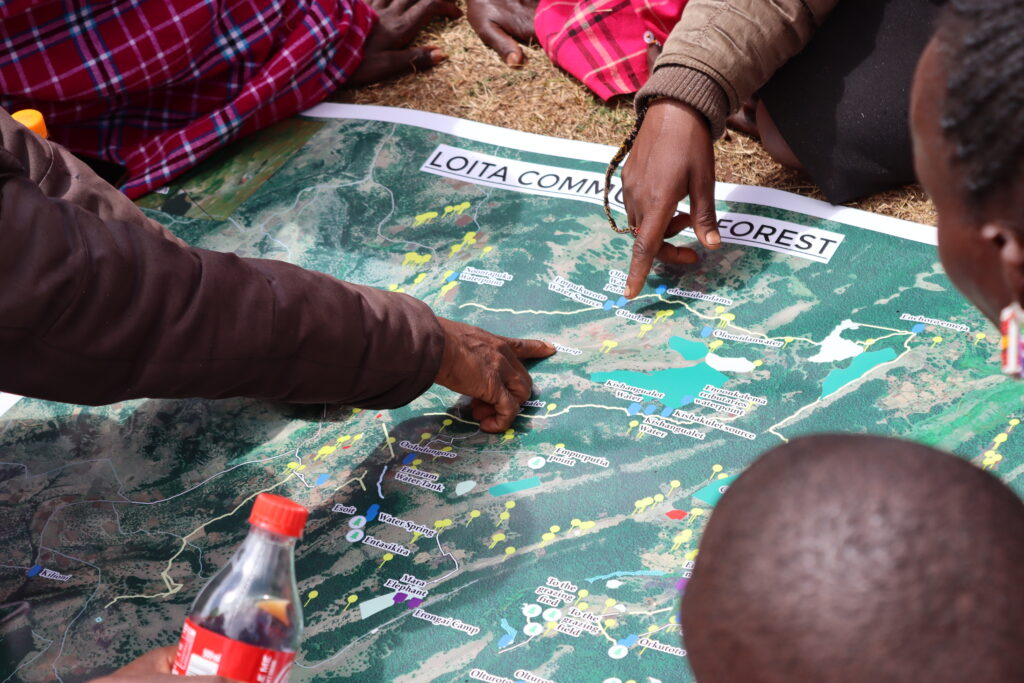
When land tenure data is woven into hazard-risk maps and vulnerability assessments, it gives policymakers a fuller picture. This brings land security into disaster planning and recovery, reduces conflict, and more effectively connects land governance with climate adaptation goals.
A study in Saint Vincent shows how tenure status can shape disaster vulnerability: it found that families with freehold land were more likely to invest in recovery and reconstruction, whereas tenants could be constrained by landlords. Mapping tenure types alongside hazard risks reveals which groups need targeted support.
Land tenure is climate resilience infrastructure: it supports long-term adaptation practices like soil restoration, sustainable farming, and mangrove replanting. Avoiding land tenure discussions in climate talks while solely focusing on finance and technology promotes a false economy. Cutting corners on rights today creates bigger – often unmanageable – costs tomorrow.
Gender can be leveraged for land rights
COP29 saw the expansion of UNFCCC’s gender programme, resulting in the Enhanced Lima Work Programme on Gender. The practical impact of this on land rights remains unclear. Set for adoption at COP30, negotiations are shaping which components will be included in this work and how these commitments will be translated into a Gender Action Plan: a powerful but underused tool to secure women’s land rights.
Women play a vital role in natural resource management and agriculture, yet face significant obstacles to own and access land. In 102 countries, women are denied land rights under customary, religious, or traditional laws and practices, despite representing 60–80% of the agricultural labour force in emerging economies.
Push the UNFCCC to catch up with its sister Conventions
Land is a powerful thread across UNFCCC and its two sister Conventions on biodiversity (CBD) and desertification (UNCCD). Yet when it comes to land rights, their trajectories diverge.
UNCCD moved decisively in 2019, recognising tenure rights as key to achieving Land Degradation Neutrality: you can’t restore or protect land if the people who depend on it risk losing access. UNCCD pushed the needle farther in 2024, calling for “land tenure focal points” – officials responsible for leading efforts to strengthen land rights in national environmental policy making. The convention also committed to prioritising women’s land rights and fair access.
CBD also took an historic step in 2024 by formally adopting land tenure indicators as part of the Kunming-Montreal Global Biodiversity Framework. This was the first time biodiversity policy recognised tenure so explicitly, and means that countries will have to track and report on land rights, including who owns and uses land, to ensure that conservation actions respect and support IPLCs.
The UN’s most famous and politically powerful climate treaty, however, remains behind on land rights. Despite the centrality of land to both fighting and adapting to climate change, signatory nations have yet to advance binding protections for land tenure, even as land-based carbon removals and voluntary carbon markets rapidly expand.
COP30 offers a moment to change course. In 2024, all three Rio Conventions called for greater technical information exchange and inter-agency cooperation, and a joint approach to land tenure governance should be on the table. If COP30 can institutionalise it, climate policy might finally become an asset to land users and their rights.
Read TMG’s full policy brief, ‘Unlocking Land Tenure: Pathways for policy action after the triple COPs of 2024′, by clicking here.
Frederike Klümper leads TMG’s Land Governance team, focusing on the intersection of gender equity, land rights and climate policy. She has extensive research, advisory and collation-building experience across Africa, Europe, and Central Asia, and holds a PhD on water and land governance in Tajikistan from the Leibniz Institute of Agricultural Development in Transition Economies.
Joanna Trimble is Senior Communications Officer for TMG’s Land Governance team, leading campaigns to advance land rights and climate justice. Drawing on her experience in global development and humanitarian organizations, she works to expose injustice and spotlight real-world solutions, and holds a Master of Philosophy from the University of Amsterdam.